
I had a little fun with an earlier post, imagining that a patchup job on the side of a building near me was in fact a prehistoric cave painting.
To make up for that, I’m sharing an image of an actual work of art on another wall. Here it is:

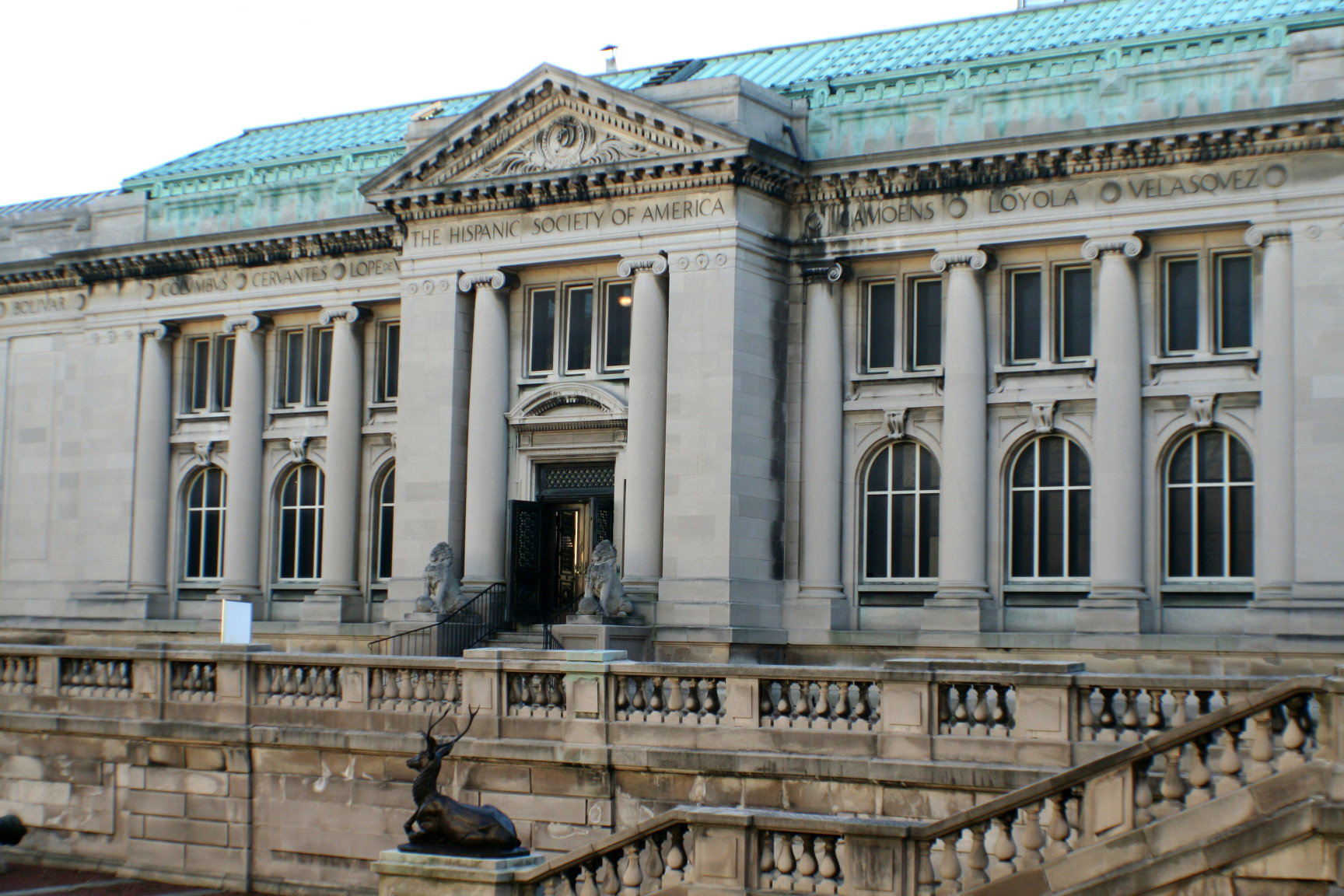
You can find this relief sculpture on the terrace across from The Hispanic Society and Museum at 155th and Broadway in Manhattan. It’s the work of the sculptor Anne Huntington and was completed and installed in 1942. I can’t find the exact dimensions of this but, as befits its subject, it’s significantly larger than life, perhaps 16 feet tall. If someone told me it was taller, I’d believe it. If someone told me it wasn’t that tall, I wouldn’t.
The museum and terrace are part of a massive Beaux Arts/American Renaissance style complex that covers the entire block from Broadway and Riverside Drive, between 155th and 156th Streets. The campus was commissioned by railroad tycoon and philanthropist Archer Huntington, founder of the Hispanic Society of America and Anne’s husband. The Academy of Arts and Letters and Boricua College are located there as well.
Here’s how I first encountered it (him):
I was out for a bike ride on a spring Saturday a few years ago, headed to the Trinity Cemetery in Upper Manhattan. A dear relative is at rest there. She chose that cemetery decades before her death because she liked the view across the Hudson River to New Jersey, where she grew up. At her internment, a family member pointed out the massive building across the street from the cemetery, and told me about the museum there.
So the plan that Saturday was to visit both the museum and the cemetery, then head back home by going down the bike path along the Hudson. The museum was undergoing a major renovation but the part that was open included its most significant attraction, Visions of Spain — a series of 14 monumental paintings by Joaquín Sorolla y Bastida. Each painting depicts a defining aspect of a Spanish city, so you see bullfighters in Sevilla, religious pilgrims in Galicia, a seaside fish market in Ayamonte. It’s a marvelous, colorful, slow-down-and-look eyeful. But even as I lingered over painting after painting, I couldn’t stop thinking about what I’d seen on the way in, emerging from the wall on the other side of the courtyard from the museum entrance.
This is no pathetic, bumbling senile knight, no caricature in a farce. He’s as real as it gets. Ragged, exhausted, accepting the inevitable failure of his quest and asking in prayer, “Was it enough?”
Note: The poem inscribed on the base of the sculpture is by Archer Huntington:
Shall deeds of Caesar or Napoleon ring
More true than Don Quixote’s vapouring?
Hath winged Pegasus more nobly trod
Than Rocinante stumbling up to God?