
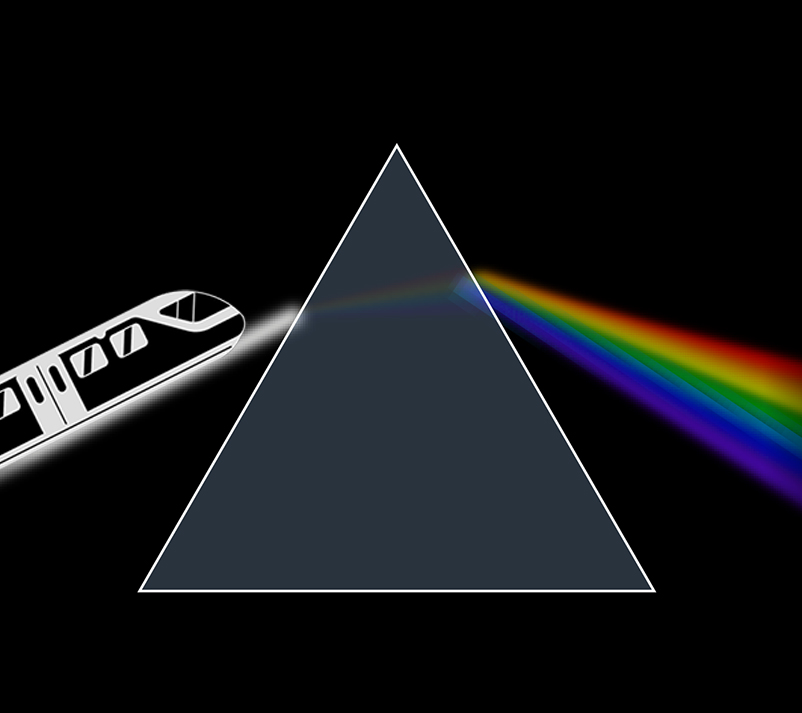
Amtrak recently unveiled the NextGen Acela, an upgrade to their high-speed rail service linking Boston, New York, Philadelphia, and D.C. Some early reviews were ecstatic. Other evaluations, from passengers in the cities Acela actually serves, were appreciative if not overwhelmed.
The new trains look marvelous but it’s a bittersweet moment. For the last decade in my former job, I made a monthly trip to Boston to spend uninterrupted, in-person time with my staff. And for all but a few of those trips, I took the Acela up and back in a day: 6:15 am departure in the morning; 4:20 pm departure in the evening.
I worked in the train both ways, as much as the spotty Acela WiFi would let me, logging in about halfway through the morning ride, then again in the afternoon just after the train pulled out. On the way home I’d work until 6 pm , which I designated as dinner time. So the company got a full day’s effort and more out of me, even though I was on the move more than than I was in the Boston office.
For the ride home, I’d load up on sandwiches and a cookie at the Flour Bakery across the street from Back Bay Station. My former staff person Heather can confirm my obsession with those sandwiches. It was a running gag between us, except it was no joke. I won’t go into it further here. The sandwiches deserve a post of their own.
At some point, I started getting upgrade coupons and could travel first class, which meant getting breakfast and dinner in the train, ordered off a menu and brought to my seat. It was better than you’d think.
Even better though, was getting a shot at one of first class’s limited number of single seats. More room, no conflict over the outlets, a window and an aisle seat at the same time! Now you can secure one of those seats when you reserve a ticket, but for most of the time I was taking that train, I had to work for it. I had strategies. In New York, I learned how to identify the boarding track before it was announced publicly. Sometimes I tagged along behind a Red Cap taking privileged passengers down to the train early. In Boston, I’d walk the extra 15 minutes to South Station to get the train home, so I could be settled in my seat before anyone at Back Bay boarded.
Wow, I was really serious about getting one of those seats, wasn’t I? And by “seats,” I mean the only two that would satisfy me: 12A and 13A. Single seats, left hand side, facing forward, direct views of the water and the evening sky, the boat basins and backyard docks, the towns and cities.
At some point in the later years, I soured on taking first class in the morning. While most of the passengers were silent or spoke in modest tones, there was always the risk of riding with someone who either had too little self-awareness or too much self-regard. Yes, it was always a man, making phone calls he apparently thought we all needed to hear when it was just barely passed dawn. And on the other end of the call, some poor assistant who had to get up as early as he did. “Amy, Amy, good morning. Can you hear me? Yeah, thanks for helping out. Just a couple of notes on the slides….”
After enduring that one too many times, I switched to the Quiet Car for the morning trip — no single seats but it was rarely crowded and that “Quiet” is strictly enforced. When the conductor announced that the car was to have a library-type atmosphere, he wasn’t advertising a perk, he was issuing an warning. And he was far from on his own when it came to enforciement. If there was a need to give someone in the car a good shush-ing, any number of the better-behaved passengers felt they’d been fully deputized to deliver it.
________________
Every once in a while, I nodded off on the first part of the trip home, after the “to-do list” I’d accumulated during the day had been addressed. On one trip home, I was so disoriented when I snapped awake that I had to check my phone for the time and my location. I’d slept right through the Hartford stop! It took an additional few moments to remember that the train doesn’t stop in Hartford on the way back to New York.
But even if I napped a little, I was always awake at 6 pm, time for dinner whether it was one of the glorious sandwiches I’d brought (those sandwiches!) or the meal one of the car attendants would bring me. After that, despite the lulling of the train and having been bone-tired since the morning, I stayed awake. In a stupefied state, not able to do much more than stare out the window, but awake nonetheless.
On one such trip home, in that state. I made a discovery…
You know that story of Dark Side of the Moon and The Wizard of Oz, right? That if you start them at the same time, there are moments where what you’re hearing on the album corresponds to what your seeing in the movie? I can’t go into details because I’ve never done this, and honestly, I felt no need to do it just for this piece. And it’s perfectly plausible that the whole “Dark Side of the Rainbow” thing could be written off as apophenia, a tendency to see indisputable patterns where none actually exist.
But whether deliberate or inadvertent, I’m open to the idea that DSOTM and WOO speak to either other. That’s because I now believe DSOTM can add resonance and commentary to any number of situations. Say for example, a journey of some kind. Or to be more specific, say the last 42 minutes and 49 seconds of an evening Acela ride home from Boston to New York at the end of a long long workday. Start Dark Side just as the train pulls out of Stamford, Connecticut, the last stop before New York City, and….I mean, it’s uncanny.
Now, I’m not saying I endured those rides home on the verge of a full-blown crisis. And for the record, I loved my job. But we are talking about being brain- and body-tired, on a lulling train ride where much of the trip is in darkness, so when you look out the window the main thing you see is yourself, your own reflection superimposed over whatever is on the other side. And I swear, DSOTM knows all about it.
The album starts with a heartbeat fade-in that leads to a crescendo of voices and sounds (maniacal laughter, a fighter plane firing away) which is then consumed by a distressed, soulful wail — a woman giving birth, a child entering the world — and that resolves into the pedal steel intro to “Breathe.” Time it right and that resolution happens just as the train blows through Old Greenwich, the first local station after Stamford, already close to full speed., the music gliding like the train.
The following instrumental, “On the Run,” comes on as the train veers out of wooded darkness to run alongside I-95. The song’s repetitive oodly-oodly-oodly motif is well suited for watching those lanes of traffic, of cars going at different speeds as you go whizzing by. Eventually that oodly-oodly is drowned out by the return of the maniacal laughter and the fighter plane machine gunning away until it crashes.
Then those alarm clocks go off, leading into the song, “Time.”
“Time” itself plays out as you pass several towns that face the other way, so you’re looking at the back windows of houses and apartments and a few bars and restaurants on small commercial streets. And somewhere in there, you pass an apartment complex/retail center built around a clocktower. Eventually, “Time” reverts to the melody of “Breathe” with the line, “Home, home again.” It’s easy to imagine people sinking to their favorite chair or spot on the couch, or settled onto a bar stool, relieved that the work day is over.
“Great Gig in the Sky”? That wrenching wordless aria that seems to end with the singer collapsing into exhaustion? That happens about three hours into the total ride, the end in sight of a day that started 15 hours earlier. So I kinda know how she feels.
“Money” plays out as we go by the commuter towns and villages of Westchester County, your Ryes, your Harrisons, your New Rochelles. Ok, got it. Then, “Us and Them” plays out once the train enters the Bronx, passing massive apartment complexes in neighborhoods that were geographically a part of New York City but far away from both the suburbs and the center of the city. Us and them, indeed.
“Brain Damage” hits as we glide across the breadth of Queens, which takes longer than you’d think a high speed train would need. I’m not suggesting in anyway that the title or the lyric’s repeated use of “lunatic” has any viable application to Queens itself. But the tone of the music itself seems as perfectly suited for the end of a journey as it is to the end of an album.
And the finale, “Eclipse,” starts just as the train makes a sweeping 90 degree turn going downward into the tunnel that passes under the East River and through Manhattan. You lose wifi here, which is why I play the version of the album stored in the iTunes folder on my laptop. With nothing but a river and an island to traverse, neither especially wide, it would seem the trip will end before the album. But there’s just enough time. And despite the hopelessness of the lyrics (“Everything under the sun is in tune/But the sun is eclipsed by the moon.” The moon. That old devil.) the music itself has a relieved, satisfying “I made it. Again!” quality. At least to me. In this context.
The album finishes just as you ease to a stop in Penn Station. The final heartbeats of the recording fade to silence just as the doors open and it’s time to detrain.
__________________
Ok. apophenia all over the place. If anyone who’s really dug into DSOTM happens to read this, they’ll be poking holes in my thesis from the get-go, pointing out everything I missed or ignored.
But that’s beauty of it. For me, strictly for me, it’s real as long as I think it is. Maybe one day I’ll get to experience it again. And if you can’t make it to the Northeast Corridor to judge for yourself, try it wherever you are, as long it’s the end of a long work day and you are something like 42 minutes and 49 seconds from home.
____________________
Postscript
I met Roger Waters once. That is to say, I encountered him. We were at Town Hall to see John Prine. A distinguished-looking man with swept back silver hair stopped at our row. He was wearing a navy blazer, light blue dress shirt and gray slacks. A little research just now reveals that his companion that night was his soon-to-be fourth ex-wife.
Anyway, he asked the young people next to us what row we were in. With that reference point, the two of them kept moving to seats much closer to the stage. As soon as they were a few rows down, the young man next to me decided to make fun of the man’s British accent and his apparent inability to decode the information on his ticket. I was going to lean over and ask if the young man had any idea who that man was, but decided not to do it.
Not long after, I saw an interview with Waters where he named John Prine as his favorite songwriter. I’d never have guessed it.