
The knock — nothing harsh to it, nothing loud or penetrating, a bit timid. Yet I heard it, despite being as far from the front door as you could be.
I was at our bedroom window after settling Duke in for a nap, looking through the slats of the blinds at what I could only think of as the Angel of Death, the plume of smoke and ash and pulverized buildings and people flowing out from the wreckage.
For the past few hours, Waterside was right in the Angel’s path, as if it were a predator in a forest and someone here snapped a twig and got its attention. But the wind had shifted, mercifully, blowing the Angel more directly eastward. I could open Duke’s window again. It was Brooklyn’s problem again.
Another knock came just as I got to the door.
“I’m here,” I said, hopefully not too loud, and, I didn’t think, too impatient. A bit sing-songy.
We moved into Waterside less than a year ago, a few months before Duke was born. If we’d had the choice we would have preferred a more convenient location, but we got the apartment we could get, and the complex’s moderate self-containment was certainly an asset now. There was plenty to access without going across the footbridge over the FDR to the Manhattan mainland. Grocery store, diner, deli/cafe, pool, playground, fitness room. The stores might have been shortstaffed but they were decently stocked. The diner was a good place to go with Duke . Diners and workers all made a fuss over him).
It was our first time living in a large apartment complex with lots of neighbors but we caught on to the rules of engagement fairly quickly. Courtesy always, intimacy never, unless something provokes it. No “Hi, my name is we just moved in.” People don’t want to take on anybody new unless it’s necessary. “What floor?” “After you.” Those are okay. Or a shared eyeroll if someone gets on the elevator one floor above the lobby (they could walk down). Or, if you’re headed to the laundry room and someone gets on without a hamper of their own, you want to find out if they are going to the lobby. It can be as simple as getting their attention and pointing at the “M” button on the panel. Sure, they could be headed to the basement anyway — there were other reasons to go there — but it’s good citizenship to spare someone the extra floor down then back up if it isn’t their destination.
As I looked through the peephole, the man at the door was stepping backward so I could see who he was. I wondered if he was trained to do that or if another tenant, behind another door, gave him the idea. When I think of him now, I see him with a short sleeve white shirt, pens in the pocket, and a solid dark tie held tight with a clasp. He wasn’t dressed like that at all but I’ve put that on him now.
I undid the deadbolt and opened the door as far as the chain allowed.
“Yes, good morning,” I said. I spoke with a smile, relaxed, but I didn’t give him any reason to think I was going to step back and let him in.
He had a clipboard that he then referred to, looking down as he said, “Mr. Hutchins?”
“Yes, that’s me.” I didn’t recognize him from the couple of owners’ meetings I’d attended. “Are you from the Board? Is there something wrong?”
“No,” he said. “This isn’t about anything like that. I’m from the management office. We’re just doing a little check.”
“Uh huh.”
“We just want to know who all is here. I know a lot of residents go away for weekends anyway but a lot of those left early, as soon as they could. And others as well.”
“Okay, we’re here,” I said. I held back from saying that we had no other place to go, only one home, this apartment, no family near the city but outside of it, nothing on the island or the shore or upstate.
“Right then,” he said and made a mark on the paper in his clipboard. I thought I heard the faintest attempt at the accent of a London bobby. Like “Roight then.”
“So you’re going door to door to do this? That’s quite a task,” I said.
“Well, it isn’t just me. And it’s not that many people. Most of the residents responded to the questionnaire.”
“The questionnaire?”
“The one in the email. Or in the building portal.”
“Okay, I didn’t see that.”
“I hope we don’t have your email wrong. Are you registered at the portal?”
“That would explain why I didn’t see it.”
I’d had my usual reaction to being encouraged to sign up for something, as I had been by signs in the lobby and by board members at residents’ meetings. Which was to not do it.
“I guess I thought my wife signed up,” I said.
He wanted to ask, I could tell. I could have played it up, but I realized that he was as nervous about me as he thought I was about him.
“She’s away for work. She just hasn’t been able to get a flight back. So it’s just me and my son.”
“Yeah, it’s a mess out there,” he said. “Your son. That’s Duke?” he said, referring again to his clipboard.
“You’ve got his name there too?”
“Yes, it’s a complete occupants’ list. Might seem a bit much but it’s good to have it now.”
He wasn’t acting like having a clipboard and an assignment from building management entitled him to get inside my door, no quick glances at the stretched chain hoping it would go slack then drop.
“You only have to check on people who didn’t already inform you that they were here or someplace else?”
“Yes, so it’s not that many. We’ve been able to call most of the others.”
Which would explain why the phone had rung several times in the last day and half. I didn’t recognize the number so I didn’t answer it and hadn’t bothered to play any messages.
“Am I the only one to be so much trouble?” I asked. And that got a relieved chuckle from us both.
“Oh no, there’s a few. Although you’re the only one on this floor.”
“The only people?”
“The only one we didn’t hear from. Mrs. Baumgarner is still here. And one other, someone else new at the other end of the hall. But this is my only stop here.”
“Okay, thanks for checking on us. That’s a good idea to get an idea of who’s here and who isn’t.”
“And the pets,” he said. “Can’t forget the pets.”
“You’re supposed to check on pets?”
“We don’t want to have any abandoned pets.”
“I would figure most people would take their pets with them.”
“You’d think that, with cats and dogs for sure.”
“I didn’t think dogs were allowed in this building. I mean, that’s not a reason we bought here. I just thought it was a rule.”
He was really loosened up now because I got a conspiratorial grin and he put his finger to his closed lips.
In fact, I knew of one dog, in residence on our floor, the elegant and remarkably even-tempered dachshund, Dolly, owned by Jeffrey and Robert across the hall. I encountered them in the hallway one afternoon bringing her back from the vet in a snug little carrier. Jeffrey said, “This is our ‘cat,’” with air quotes. Robert turned the carrier so I could see the leather-brown snout, nose like a black olive.
“Of course, there’s all kinds of pets, right? I said. “Ones that don’t bark or cry, that you wouldn’t necessarily take with you or know about.”
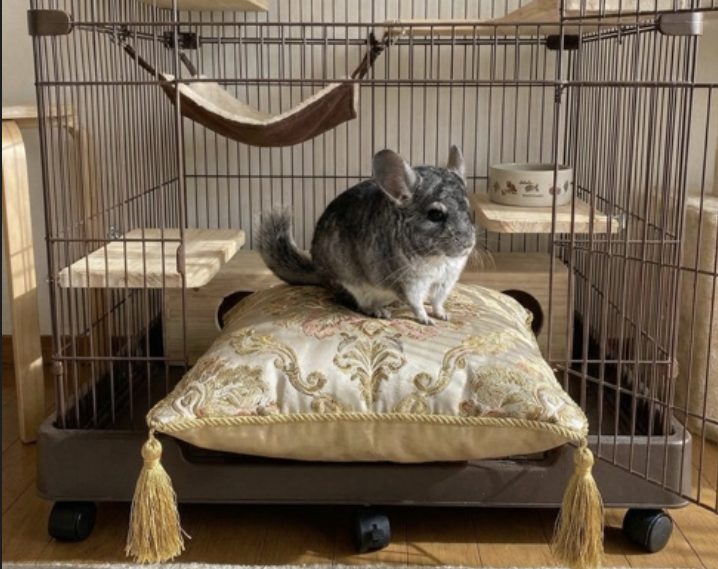
“Oh yes. The questionnaire has a follow-up in the pet section where we ask about that. With categories. Bird, reptile, fish, rodent. For hamsters and gerbils. We even included an option to check ‘Other’ and a space to explain.” He added, “We have a chinchilla!”
“Really? That’s exciting.”
“His name is Ernesto.”
“The tenant or the chinchilla?”
“Huh? Oh, it’s the chinchilla’s. The name wasn’t required but the owner shared it anyway.”
“Good to know. In case you have to introduce yourself. Anything else exotic? Anyone check ‘Other?’”
“That was the chinchilla. I guess the owner didn’t want to call it a rodent.”
“Maybe they just don’t like to think of it that way. Rodents, you know, you try to get rid of rodents. Not make them part of the family.”
I really was dragging this out.
“What if someone left a pet behind?” I asked.
“The questionnaire has a place to tell us if they’ve designated someone else to attend to the pets in their absence.”
“Are there pets still here that are unattended?”
“We’ve been asked to look in on a few. And there are people here who don’t get out much or can’t, and their helpers can’t make it over yet, that might need more food or some other help. The company policy is to tell them that officially we aren’t supposed to intervene but we’ll make an exception.”
“So the company tells you to tell them the company says no but you will help? That’s company policy?”
“I like it. It makes it seem like I’m willing to bend the rules just for them.”
Well, that is appealing, I thought.
I heard Duke starting to stir. So did he.
“There’s my call to duty,” I said. “That number you have for us is the landline. We don’t tend to answer that one.”
I gave him the number for the cell phone I’d only had since Duke was on the way. He wrote it down, one digit at a time, saying each aloud,. He held the clipboard up so I couldn’t see what he was writing, but I can confirm that the pen was making actual contact with the sheet.
We said goodbye and I closed the door and reset the locks. Then my smile slackened.
What if…? Nah. But…
I set Duke up with a bottle and settled him in to his bouncy seat next to the computer desk. A quick look at the inbox for our joint email account, the address we use only a little more often than our landline, and there it was, the “Brief Questionnaire” message from the building, sender and subject line in bold atop a stack of additional unread messages. I clicked it open, and just as he’d said, there was the survey, pet section and all.
If I see him again, in the building office or a meeting or just going around somewhere, I’ll nod at him in recognition. Like we’re friends.